
April 10, 2026

Uncategorized

How  Much Time Child Spend on Educational Sites

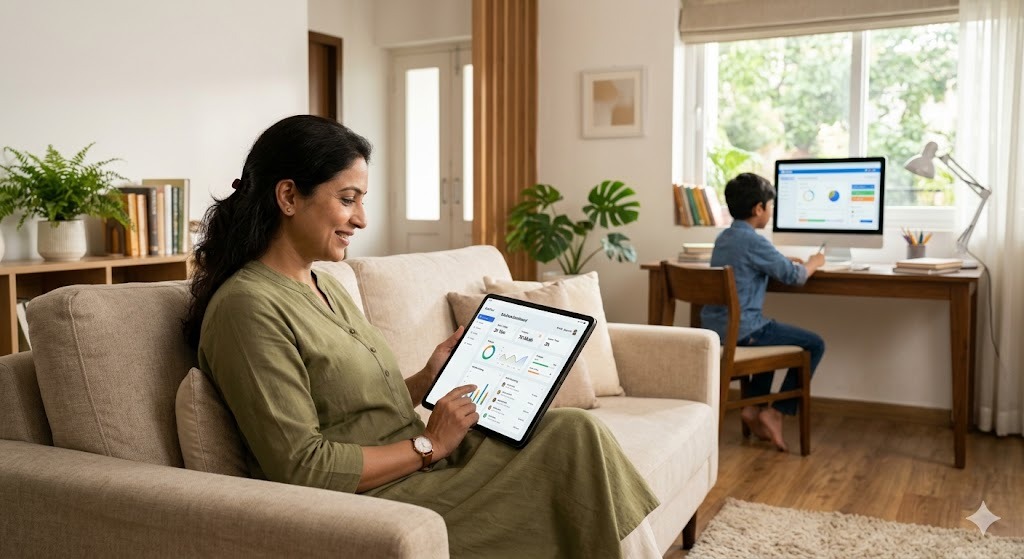
In today’s fast-paced world, the digital landscape is no longer just a luxury, it’s the new playground, the new library, and the new classroom all rolled into one. As parents, our instinct is often to glance at the clock with anxiety, wondering, “How much time is too much?” We have been conditioned to fear the screen. However, when it involves education sites, the conversation needs to undergo a radical shift, from counting minutes to measuring impact. It’s not just about the duration of the session; it’s about the quality of the Curated Learning Environment we provide. This is where the philosophy of Apni Prerna comes in, shifting the focus from restriction to enrichment. Instead of looking at a child on a tablet as a “distracted” child, we should see a student engaged in Guided Digital Growth. The Shift from Monitoring to Awareness The traditional approach to digital parenting, often referred to as “Parental Control, frequently feels like being a “bodyguard.” It’s a weary cycle of blocking, restricting, and surveillance. While well-intentioned, this creates a barrier of distrust. Modern parenting is evolving, and platforms like Apni Prerna are leading this change. Instead of being a digital gatekeeper who stands in the way of the internet, you can become a Digital Parenting Companion. When a child spends time on high-quality educational platforms, they aren’t just “using a device”; they are exploring deep-seated interests and building future-ready skills. Your goal is no longer to hover over their shoulder with suspicion, but to Stay Present & Informed. This subtle shift allows children to feel trusted, fostering a sense of autonomy while ensuring they remain on a constructive path. Understanding the “Digital Report Card” Imagine if you could see your child’s online activity not as a technical log of “Time Spent,” but as a Digital Report Card. This is a core feature of the Apni Prerna ecosystem. This isn’t about surveillance; it’s about understanding the unique spark of their curiosity. If a child spends two hours on a coding platform or a language-learning app, that isn’t “screen time”, that’s “skill time.” By practising Aware Parenting, we can learn to distinguish between: Apni Prerna helps parents facilitate this Guided Digital Growth, ensuring that the digital tools children use are sharpening their minds rather than dulling them. Building a Smart Family Routine A common struggle for modern families is finding the “perfect” balance. Instead of a “hard stop” where you block the internet at 8 PM, which often leads to frustration, why not establish a Smart Family Routine?  Apni Prerna is designed to integrate technology into daily life as a tool for success, not a forbidden fruit. Creating a Safe Space for Curiosity Safety shouldn’t feel like a digital prison. In a Curated Learning Environment, the boundaries are invisible but incredibly effective. Apni Prerna creates a “walled garden” where a child can explore, fail, and try again without stumbling into the darker corners of the web. This environment gives the child the freedom to satisfy their curiosity and gives you the peace of mind that comes from Guided Digital Growth. When we move away from the “Bodyguard” mindset and toward being a “Companion,” the power struggle over devices often disappears. The child no longer feels watched; they feel supported and understood. The Power of Being Informed Being “informed” is a proactive superpower; “monitoring” is merely reactive. By staying in the loop with your child’s digital journey through Apni Prerna, you transform the way you interact with them. Instead of asking “Why were you on your phone so long?”, you can have meaningful dinner-table conversations: “I saw you were learning about the solar system today, what was the most surprising thing you found out?” This is the essence of Aware Parenting. It bridges the gap between the digital world and the real world, making you a part of their discovery process. Conclusion: Quality Over Quantity The question we ask ourselves as parents should no longer be, “How much time is my child spending on education sites?” Instead, we must ask, “How is this time shaping their future?” Digital devices are tools of immense power; they can be a distraction, or they can be a launchpad. When used within the framework provided by Apni Prerna, these tools become catalysts for brilliance. Let’s stop being the “filter” that stops life and start being the “guide” that opens doors. By choosing tools that foster a healthy, educational, and safe environment, we aren’t just protecting our children from the world; we are empowering them to lead it. Understand what really matters in your child’s digital learning journey. Explore this perspective See how Apni Prerna creates a more meaningful digital learning environment,And what begins to change when learning finally has direction. Explore Apni Prerna Because the goal was never just to manage screen time.It was always to help them grow with clarity.
Uncategorized

One Dashboard Can Change How Your Child Learns

My son had been on his tablet for three hours. Textbook open. Earphones on. Notebook beside him. From the outside, it looked perfect. A parent’s dream, almost. But when I asked him one question, just one from what he’d been watching for three hours, he looked at me blankly. He hadn’t learned anything. He’d been busy. But not learning. That day, something shifted for me. Because the problem wasn’t my child. The problem wasn’t even the device. The problem was that no one had given him a guided digital growth path. He was navigating a world of infinite content, completely alone. The Real Problem No One Talks About India is going digital faster than any generation before us. By 2025, over 500 million students will have access to some form of digital learning. Apps, YouTube channels, online courses, the options are endless. But here’s what the numbers don’t show: Access is not the same as learning. When a student opens a device without a clear direction, here’s what actually happens, not in theory, but in real life: A student opens a learning video. An autoplay recommendation pulls them somewhere else. Forty minutes later, they’ve watched three unrelated videos. The notebook is still blank. We blame the child. We argue about screen time. We take away devices at the dinner table. But the actual gap is this: no one built a curated learning environment around the child before handing them the device. A classroom works because it has structure, a teacher, a sequence, and a purpose. The moment a student goes home and opens a screen alone, all of that structure disappears. What remains is chaos disguised as learning. What Guided Digital Growth Actually Looks Like Think about the last time a child in your home came back from a screen session genuinely excited about something they’d understood. Not just watched. Understood. That moment happens when learning has a direction. When the content has a beginning and an end. When a student knows what they’re opening, why they’re opening it, and what they’ll take away. This is what aware parenting looks like in the digital age: being present in your child’s digital life without having to physically sit beside them every single minute. A student with a clear learning path learns. A student who opens a screen with no direction? That student spends time. There’s a difference. And over months and years, that difference compounds. Three Things That Shift When Structure Enters the Picture Focus stops being a daily battle. Without structure, concentration is something you have to fight for every session. With it, focus becomes the default. When students work inside a curated learning environment, they’re not burning mental energy on fifty micro-decisions, “should I watch this next? is this useful?”, every minute. That energy goes into actually absorbing what they’re learning. Parents stop guessing. One of the most exhausting things about modern parenting is this: “I have no idea what my child actually does on that device for two hours.” That uncertainty creates constant friction, arguments, restrictions, and guilt. A family wellness dashboard changes this. Not by monitoring. Not by policing. But by giving parents a clear, honest picture of whether their child’s digital time is moving them forward. When parents can see progress, anxiety drops. Trust grows. And the child earns more independence, not less. Time starts to feel like it went somewhere. When a student finishes a session with nothing to show for it, they feel it, even if they can’t name it. A quiet, low-grade sense of “I wasted time” slowly chips away at motivation. But when learning follows a clear structure and produces a visible result, students feel momentum. And momentum builds everything else. The Generation That Will Live Digitally Here’s the truth: no amount of screen-time restriction can change: The children growing up today will live, work, and build their lives in digital spaces. That’s not a threat. That’s just reality. The question is not whether they’ll be online. It’s how they’ll use that time. A student who grows up with random, unguided digital access develops one set of habits ,scrolling, distraction, and passive consumption. A student who grows up with a smart family routine and guided digital experiences develops something completely different: focus, self-direction, and the ability to actually learn independently. Twenty years from now, the gap between these two students will be enormous. Not because one was smarter. But because one had the right environment early on. This Is Where Apni Prerna Comes In Apni Prerna is a software that blocks content. It’s not surveillance dressed up with a friendlier interface. It was built on one belief: children don’t need less technology, they need better technology experiences. Apni Prerna creates that experience. It gives students a structured, distraction-free space where every session has a purpose and every minute of screen time points somewhere meaningful. It gives parents a calm, clear window into their child’s digital day, without turning them into constant monitors. It’s the difference between handing a child a device and sending them into the ocean alone, versus giving them a path, a compass, and a digital parenting companion walking alongside them. For families across India, in cities, in small towns, in homes where parents work long hours and can’t sit with their children every evening, Apni Prerna is what guided digital growth looks like, practically. The Question We Should Have Been Asking All Along We’ve spent years asking: “How do we reduce screen time?” The real question was always: “What is actually happening during that screen time?” If a child spends ninety minutes in a focused, meaningful learning flow, that’s not a problem. That’s progress. If a child spends forty-five minutes bouncing between content with no direction, that’s not learning. That’s just time passing. Apni Prerna shifts the experience from the second to the first. That shift is small to set up. But what it builds over time, in a child’s habits, confidence, and capabilities, is everything. Ready to See the Difference? Your child already

Uncategorized

The Illusion of Study Time: What Indian Parents Miss About Digital Learning

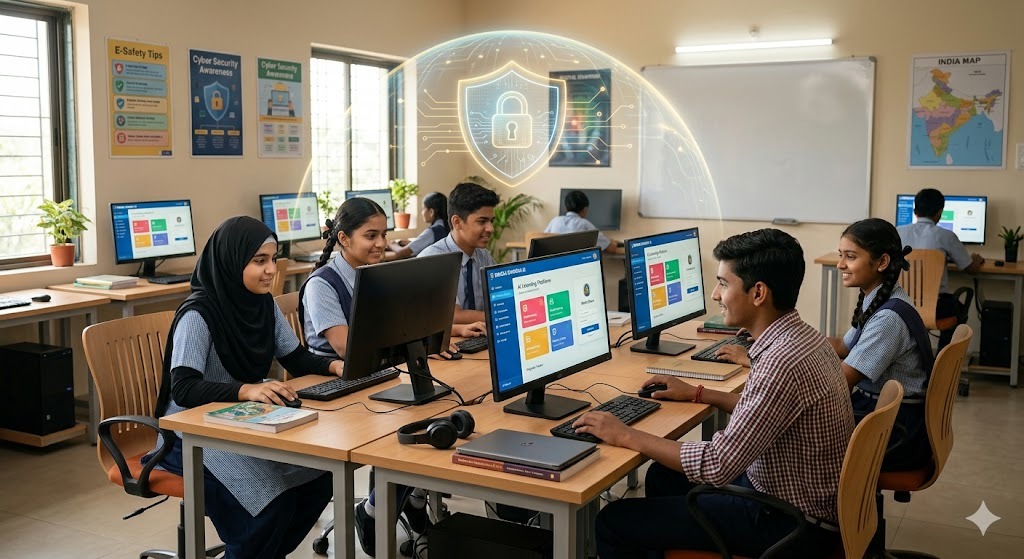
It is 8 PM. Your child is sitting at the laptop. The screen is on. They look focused. Maybe even a little stressed, in a productive way. You feel that quiet satisfaction of a parent whose child is “doing well.” Then you walk past. Just for a second. They click something. The tab changes. You both pretend you didn’t see what you just saw. That quiet gap, every single evening, is what compounds over months into a Class 10 student who sat in front of a screen for 900 hours but cannot explain a single chapter. This is not a parenting failure. This is a design problem. And until we see it clearly, we cannot fix it. The Problem Nobody Is Talking About Out Loud Every parent in India right now is dealing with the same invisible challenge: their child is on a device for hours, and on paper, it looks like studying. Online classes. YouTube tutorials. Educational apps. PDFs. Notes in a Google Doc. It all looks right from the outside. But the inside of that screen is a completely different story. 61% Urban Indian parents report their children spend three or more hours daily on social media and online games, a second school with no teachers, no curriculum, and a business model built entirely on keeping their children’s attention as long as possible. (Local Circles Survey) A child can watch a lecture for five minutes, switch to gaming, spend 45 minutes watching reels, and return to the “study tab” the moment they hear footsteps. By the time you check in, the screen looks exactly the way it should. Visibility without understanding is not safety. It is false confidence. Why Traditional Monitoring Does Not Work Anymore A generation ago, monitoring was simple. Books were physical. Homework had a beginning and an end. Teachers sent notes home. You could see progress, or the lack of it, with your own eyes. Today, everything is behind a screen. And screens were not built for your convenience as a parent. They were built by engineers whose sole job is to capture and hold attention, especially a child’s attention, which is the easiest kind to capture and the hardest kind to reclaim. You cannot parent your way through an algorithm. The standard advice, “set rules,” “have conversations,” “check in regularly”, is good advice that survives approximately nine days before the environment overwhelms it. What parents are being asked to do, without realising it, is to out-engineer platforms that employ thousands of specialists to do exactly the opposite. That is not a fair fight. And it is not a fight you should have to win alone. The Real Danger Is Not Distraction. It Is False Security. When we talk about children and screens, most conversations go immediately to addiction or screen time limits. But the more serious problem for most Indian families is something quieter. It is the parent who believes their child is studying regularly. Who is proud of the hours being logged? Who has built a mental picture of progress, a picture that does not match reality? What parents believe: “My child is studying for 3 hours every evening.” “They are using technology productively.” “I would know if something was wrong.” What often happens: Actual learning may be under 40 minutes. Attention is split across multiple tabs. Important signals go unnoticed. The danger here is not just academic. According to the latest NCRB reports, cybercrimes against children are surging year after year. Harmful content, addictive games, and unsafe downloads are literally three clicks away from any homework search. And because it all happens quietly, invisibly, behind a screen that always shows the right tab when you walk in, most parents find out too late. What Modern Parenting Actually Requires Here is something worth sitting with: the goal of digital parenting is not control. Over-control creates resistance. No control creates risk. What is needed is something in between, awareness with wisdom, structure without pressure. A parent today needs three things: 1. Visibility not surveillance, but a clear picture of what is actually happening on that device. Which sites are being visited? Where is the time going? What is getting blocked before it even loads? 2. Structure a digital environment that makes studying easier than being distracted. Not rules that a child argues against, but a design that gently points them in the right direction before they even consciously choose to wander. 3. Confidence the ability to say “I know my child is learning safely” instead of “I hope my child is learning safely.” These two sentences feel similar. They are worlds apart. This Is Exactly Where Apni Prerna Comes In Apni Prerna, built by Apni Pathshala, is a parenting support tool designed for precisely this moment in Indian education. It is not spyware. It is not a surveillance system. Think of it the way you think of a seatbelt, present and quiet, noticed only when something would have gone wrong without it. It turns a child’s computer from a distraction machine back into a learning tool. Not by threatening, not by punishing, but by design. Automatic content blocking Adult content, gambling sites, and malware are blocked before they even load. No pop-ups, no negotiations. Study-hour structure Games and entertainment are limited during study time, the same way a classroom limits distractions. Parent dashboard Real-time view of sites visited, time spent, and what was blocked. Weekly summaries in plain language. Builds lasting habits A child who grows up with structured digital habits does not need to be monitored forever. The goal is calibration, not control. It is already deployed across more than 30 community learning centres across India, where a single POD leader manages an entire computer lab alone. Without a system like this, every such centre slowly becomes a cyber cafe. With it, the centre stays a classroom. Let Us Be Clear About What It Is Not Because this part matters more than any feature list. Apni Prerna does not watch your child through a webcam. It does not read private messages or personal

Special Offer for Early Users : Apni Prerna is FREE for the first 100 parents.